Up-and-Coming Austin Real Estate Markets Worth Watching in 2026
Chris Hitchcock September 5, 2026
Chris Hitchcock September 5, 2026
Austin's real estate market has changed considerably over the past few years.
The rapid appreciation and intense bidding wars of the pandemic era have given way to a more measured market. Buyers have more choices, sellers have to compete more carefully, and investors have more time to evaluate whether a property actually makes sense.
That shift creates an interesting opportunity.
Instead of asking where Austin has already become expensive, investors and buyers can look for the areas where development, infrastructure, employment and lifestyle are beginning to converge.
Several Austin-area neighborhoods stand out in 2026.
These aren't necessarily the city's cheapest neighborhoods—and "up-and-coming" doesn't mean guaranteed appreciation. Rather, they're areas where significant investment and development are creating the potential for long-term change.
The citywide numbers provide useful context.
According to Unlock MLS, Austin's median residential sale price was $605,000 in June 2026, up 3.6% from June 2025. At the same time, active listings were down 22.1% year over year, pending sales were up 16.5%, and the city had 4.3 months of inventory.
Year to date through June, Austin's median residential price was $572,500, down 1.3% from the same period in 2025. Closed sales, however, were up 6.4%.
That combination is worth paying attention to.
Prices aren't moving uniformly in one direction. Buyers are still active, but the market is considerably more selective than it was a few years ago.
For an investor, that's potentially a better environment for research.
You can look at a neighborhood based on its fundamentals rather than simply chasing momentum.
If you're looking for an Austin area where the physical landscape is changing quickly, East Riverside belongs near the top of the list.
The corridor already has a combination of urban proximity, housing, transportation access and development activity. What's coming next could make the area even more significant.
The City of Austin is currently working on the future of the East Riverside corridor, including housing, mobility and public-space improvements. The nearly 125-acre Grove-Riverside site sits along East Riverside Drive and Grove Boulevard next to the future Austin Light Rail and planned Grove Station.
The site remains in the planning phase, so investors should not treat the future development as a completed project. But the location itself is notable.
It's a large piece of land positioned alongside future transit infrastructure.
That's the kind of combination investors watch.
The larger River Park development is also reshaping the East Riverside conversation.
The planned 109-acre mixed-use development is expected to bring housing, offices, retail, restaurants, parks and trails to the corridor. The first phase includes a major music venue, with the venue targeted for 2027.
The result could be a very different East Riverside several years from now.
Instead of functioning primarily as a residential corridor, parts of the area could become a more complete live-work-entertainment district.
There is, however, an important counterpoint.
East Riverside has received substantial new apartment supply, which gives renters more choices and creates competition among landlords. Recent local apartment-market analysis has found significant concessions at newer properties along the corridor.
For investors, that means location alone isn't enough.
The purchase price and property-level economics need to work.
Just south of Downtown, St. Elmo has developed into one of Austin's most interesting emerging districts.
The area combines restaurants, breweries, creative businesses, residential development and access to South Congress.
Now, more commercial development is adding another layer.
A mixed-use project at 4201 South Congress Avenue received approval in early 2026 for approximately 200,000 square feet of office, restaurant and retail space across multiple buildings.
That's significant because commercial development can change a neighborhood's daily rhythm.
More businesses mean more employees.
More employees can support restaurants and retail.
More amenities can attract residents.
And more residents can support additional businesses.
That cycle is one of the reasons mixed-use districts can become particularly interesting for real estate investors.
The appeal of St. Elmo is its location.
It's close enough to Downtown and South Congress to benefit from Austin's urban core while maintaining a different identity.
For buyers who want proximity to the action without living directly downtown, that can be compelling.
For investors, the opportunity is understanding which properties can benefit from the area's continued evolution without paying a premium that already assumes everything has happened.
East Austin remains one of the city's most closely watched real estate areas.
But rather than treating all of East Austin as one market, investors should break it down by corridor.
Areas around East MLK, Chestnut, East 12th, East 7th and Plaza Saltillo have different property types, price points and development patterns.
One of the major developments to watch is the St. John redevelopment.
In 2026, the City of Austin finalized the sale of a 19-acre site for a redevelopment planned as a mixed-income, mixed-use community. The project is expected to include housing, 15,000 square feet of community-serving commercial space, pedestrian and bicycle improvements and flood mitigation. Construction is expected to begin in 2026, with final delivery anticipated in 2028.
This isn't simply another apartment project.
It represents a broader neighborhood investment strategy.
And that matters when you're evaluating an area's long-term trajectory.
East Austin offers something developers can't easily recreate: proximity to Downtown plus an established neighborhood identity.
There are already restaurants, bars, coffee shops, businesses, parks and historic homes throughout the area.
New development is adding density rather than creating an entirely new neighborhood from scratch.
That can make certain pockets especially interesting for buyers who want both lifestyle and long-term location value.
For buyers priced out of Austin's central neighborhoods—or investors looking farther along the growth curve—Manor deserves attention.
The area has experienced substantial population growth and is increasingly connected to the broader Austin employment base.
One of the newest developments is Eastwood, a planned 458-acre mixed-use community with approximately 1,335 residential lots and 97 acres designated for commercial and retail space.
The development is expected to represent roughly $1 billion in investment, with the first homes planned for 2027.
The location is also positioned near major economic drivers including Tesla's Gigafactory and Samsung's Central Texas operations.
This is the type of development investors should watch before the neighborhood becomes fully established.
There's a difference between buying in an already mature market and buying into a community that's still building its infrastructure, housing base and retail ecosystem.
The latter can offer more potential—but also more uncertainty.
North Austin has become its own economic center.
The Domain, Q2 Stadium, major employers, restaurants, retail and new residential construction have transformed the area into something much larger than a commuter suburb.
The broader North Burnet corridor continues to see residential development, while employment centers provide an important source of housing demand.
For investors, this is a different strategy from East Riverside or Manor.
You're not necessarily looking for a neighborhood that is just beginning to develop.
You're looking at an area where significant development has already occurred and asking:
Where is the next layer of growth?
That could mean surrounding neighborhoods that benefit from Domain employment without carrying the same price premium as the most established pockets.
The most interesting opportunities aren't necessarily concentrated in one neighborhood.
Instead, they're appearing in different types of markets.
Market | What makes it interesting | Main consideration |
|---|---|---|
East Riverside | Transit + major redevelopment | Significant new housing supply |
St. Elmo | Mixed-use growth + South Austin location | New commercial supply |
East Austin / MLK | Downtown proximity + redevelopment | Property-by-property variation |
Manor | Large-scale growth + regional employment | Longer development timeline |
North Austin | Jobs + Domain + established amenities | Competition and pricing |
This is why a neighborhood ranking alone isn't enough.
A strong investment in one neighborhood can outperform a weak investment in another.
The property still matters.
Mortgage rates remain an important part of the Austin story.
Freddie Mac's average 30-year fixed mortgage rate was 6.71% on September 3, 2026, with the 15-year rate at 6.04%.
At rates in this range, investors need to pay closer attention to cash flow.
A property that looked attractive when borrowing costs were substantially lower may not produce the same returns today.
That makes the purchase price particularly important.
Investors should run the numbers using today's financing costs rather than assuming a future rate cut will rescue the investment.
If rates eventually fall and refinancing becomes attractive, that's upside.
It shouldn't be the foundation of the deal.
When evaluating an Austin property, don't stop at the MLS listing.
Look around it.
What's being built?
What's been approved?
What is still only proposed?
Where are future transit stations planned?
Are new apartment communities coming online?
Are major employers expanding nearby?
Are roads being widened?
Are parks or trails being added?
Are older commercial properties being redeveloped?
These questions can tell you more about a property's potential than a generic citywide forecast.
This is especially important in a fast-growing city.
A proposed project can change.
A development can be delayed.
Financing can fall through.
A zoning case can be modified.
A planned transit line can take longer than expected.
Smart investors separate projects into stages:
Proposed → Approved → Funded → Under construction → Completed
The farther along a project is, the more weight it should generally carry in your investment analysis.
The next stage of Austin real estate could be less about explosive appreciation and more about identifying specific pockets of durable demand.
Watch these five indicators.
1. Housing affordability
If mortgage rates remain elevated, affordability will continue influencing where buyers can realistically purchase.
2. New housing supply
More supply can help buyers but create competition for existing landlords and sellers.
3. Employment growth
Housing demand follows jobs.
4. Infrastructure
Transit, roads and public spaces can change the attractiveness of a neighborhood over time.
5. Development momentum
One new project doesn't necessarily change a neighborhood. Several projects arriving together can. That's the pattern worth watching.
The most compelling Austin investment opportunity may not be in the neighborhood everyone is talking about today.
It may be one corridor over.
The areas worth watching are where several forces are beginning to overlap: New housing, New infrastructure, New businesses, New employment, and existing demand.
East Riverside has the scale.
St. Elmo has the lifestyle and location.
East Austin has proximity and established identity.
Manor has room to grow.
North Austin has employment and infrastructure already in place.
None is a guaranteed investment.
But each offers a different version of the same story: Austin is continuing to build outward, upward and into new centers of activity.
For buyers and investors, that creates a more interesting market than simply asking whether Austin home prices will rise or fall.
The better question is:
Where is Austin investing next—and what does that mean for the property you're considering?
That's where the real opportunity may be.
Stay up to date on the latest real estate trends.
Austin's real estate market has changed considerably over the past few years.
Major projects across Austin and Central Texas are creating new centers of opportunities.
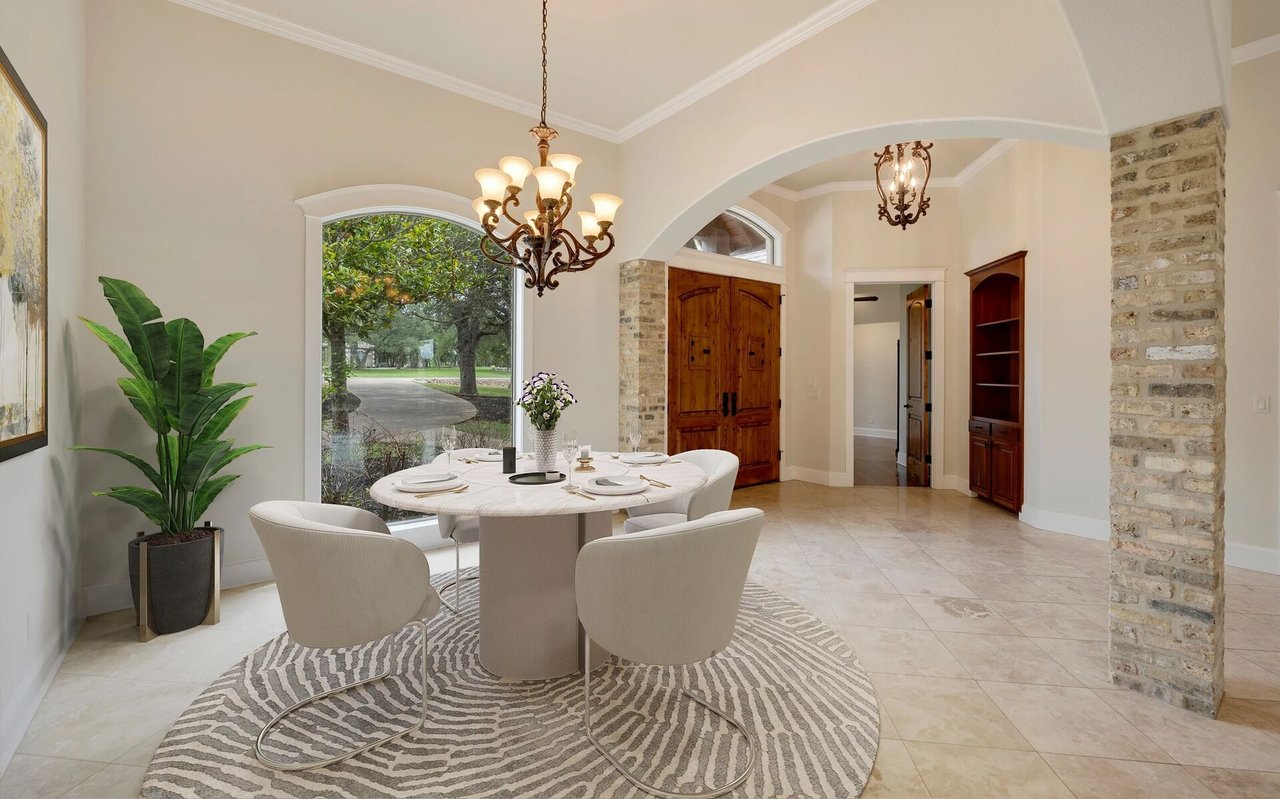
East Central Austin has become one of the city’s most closely watched areas for real estate.
Christopher Hitchcock builds, buys, manages, and sells real estate of his own. Every service he provides is backed by firsthand experience because he doesn’t just advise on real estate. He practices it.

CHRIS HITCHCOCK
1212 Guadalupe St 1100 Austin, TX 78701